
Tīna Lūse: Latvia Aims to Be the Most Efficient and Trusted Fintech Hub
In FT Finansal Teknoloji’s Global Fintech Association Interview Series, Tīna Lūse, Head of the FinTech Latvija Association, discusses Latvia’s export-driven fintech ecosystem, its regulatory and licensing environment, and the country’s potential role as an EU entry point for fintech companies. She also highlights opportunities for closer cooperation with Türkiye and Central Asia in payments, market access and cross-border fintech development.
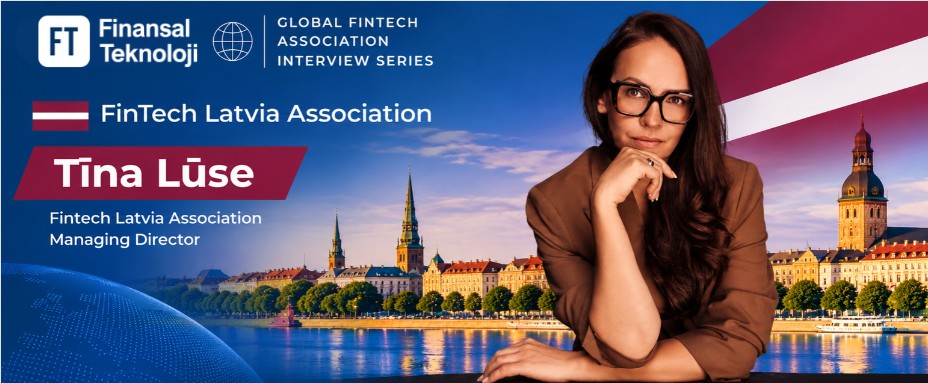
1. How do you see Latvia's fintech ecosystem today? Which developments do you find most promising, and how is the association contributing to its next chapter?
Latvia is a small market that has built an export industry. There are 127 fintech companies in Latvia. In 2024 they employed 3,644 people, 9% more than a year earlier, and paid more than €91 million in taxes, an increase of 28% on 2023. Most of the business is done abroad. Investment platforms regulated in Latvia serve more than 800,000 investors in other countries, and together they hold almost a quarter of the European peer-to-peer lending market.
What I find most promising is the momentum in licensing. Since the start of 2026, Latvijas Banka has issued more than 20 licences to payment institutions, e-money institutions and crypto-asset service providers. A new generation of companies is choosing Riga as its EU base.
The association's role is to make companies, the regulator and state institutions work toward the same goal. We train the people who meet foreign investors first, such as LIAA's representatives abroad. Every year we publish data on the sector in Fintech Pulse. We also represent Latvian fintech at international events and trade missions.
Fintech Pulse is our main tool for showing the sector as it really is. It is the association's annual report on Latvian fintech, with data on companies, jobs, turnover, taxes and investment, so that every discussion about the industry is based on facts. This year we celebrate five years of Fintech Pulse with the Finance of the Future Forum in Riga on 27 November. There we will present the latest figures, discuss the priorities ahead with industry leaders and close the day with the Fintech Pulse Awards. Registration is open. We have also launched a podcast series, “Small HUB, Endless Opportunities”, with ten weekly episodes from October to January. In the first episode, Santa Purgaile, Deputy Governor of Latvijas Banka, explains what it takes to get a fintech licence in Latvia. All episodes are available on our YouTube channel.
2. What are the main priorities for your members at the moment? How are these priorities shaping the association's work?
Our members are a diverse group: payment and e-money institutions, lenders, investment and crowdfunding platforms, RegTech companies and crypto-asset service providers. Their priorities come together in three areas:
- Predictable regulation: clear timelines, stable rules and a proportionate compliance burden.
- Access to markets and partners: banking relationships, payment infrastructure and new corridors beyond the EU.
- Talent: the ability to hire and keep strong finance and technology specialists in Riga.
These priorities set our agenda. We represent the sector in dialogue with the government and the regulator and push for decisions based on data. Internationally, we work with LIAA to make Latvia visible in the markets where our members want to grow.
3. How do you view the role of regulation in Latvia's fintech development? What helps create a constructive dialogue between the industry and public authorities?
Regulation is one of Latvia's strengths. Latvijas Banka runs an Innovation Hub, a regulatory sandbox and free pre-licensing consultations. With a well-prepared application, a licence can be granted within two to three months after the complete package is submitted. The requirements remain strict. Latvia was also the first country assessed in MONEYVAL's 6th round and was rated high or substantial on 10 of 11 effectiveness indicators. That trust is valuable for every company licensed here.
In our experience, constructive dialogue rests on shared facts and shared goals. When reforms are discussed, we ask that they begin with clear, measurable outcomes for consumers, companies and the state. Examples are faster supervisory decisions, lower compliance costs, shorter complaint handling, and unified access to state AML and sanctions data for all market participants. When both sides work from complete and verified data, the discussion becomes far more productive.
4. How are Latvian fintech companies approaching international growth? What role can cooperation between fintech associations play in supporting that journey?
Most Latvian fintechs are international from the start. The domestic market is small, so the model is to build in Riga and serve Europe and beyond. The largest Riga-based fintech groups operate in up to 25 countries on three continents. In 2025 the revenues of just two of them exceeded half a billion euros, more than the sector's entire turnover in Latvia.
Associations can shorten this journey considerably. We open doors to regulators, banks and partners that a single company might need years to reach. We share market data, connect members directly, and build trust between ecosystems, which matters most in financial services. Initiatives such as this interview series and forums such as the Silk Road Forum in Tashkent are exactly where that cooperation begins.
5. How could Türkiye's potential participation in SEPA help strengthen payment connections between Europe and Eurasia? What role could Latvia's fintech ecosystem play in developing this corridor?
Türkiye's letter of intent to the European Payments Council, announced at the EU–Türkiye High-Level Economic Dialogue in July, is an important signal. The EU is Türkiye's largest trading partner. SEPA participation would make euro payments between Türkiye and Europe faster, cheaper and more transparent, as it already does for non-EU participants such as Switzerland, Norway and the United Kingdom. For SMEs, exporters and families sending money home, the difference would be very concrete.
Geography also matters. Türkiye is a natural link between Europe and the markets of the Caucasus and Central Asia. Inside SEPA, Türkiye could become the bridge for payment flows along the whole corridor.
Latvia can contribute in two ways. First, we have a strong base of licensed payment and e-money institutions with experience in cross-border payments, compliance and EU passporting. They can be technology and licensing partners for the companies building this corridor. Second, Latvia is a fast and credible entry point to the EU for Turkish and Central Asian fintechs. We combine an accessible regulator with a strong AML reputation, which is what such corridors need.
6. Where do you see opportunities for closer cooperation between Latvia and the fintech ecosystems of Türkiye, Azerbaijan, Kazakhstan, Uzbekistan and Kyrgyzstan?
I see three main opportunities:
- EU market entry. Fast-growing fintechs from these markets need a reliable route into the EU. Latvia offers a licence that can be passported across the European Union and an English-speaking regulator that is open to dialogue.
- Payments and remittances. These are large corridors with strong demand for faster and cheaper transfers. Latvian payment and e-money institutions already have the experience to serve them under EU standards.
- Lending and investment know-how. Latvian companies have built leading European platforms for consumer lending and retail investment. Ecosystems now developing these segments can learn from that experience and partner with these companies.
Latvia has another practical advantage: our specialists understand the business culture of the region and know how to work across very different markets. As a next step, I would welcome a structured exchange between associations, with joint sessions for members and regular sharing of regulatory and market data.
7. Looking ahead, how would you like Latvia to position itself within the European fintech landscape? What would you like international fintech companies, investors and potential partners to know about the opportunities Latvia offers?
I would like Latvia to be known as the place where a fintech enters the EU quickly, properly and with a strong reputation. We do not aim to be the biggest hub. We aim to be the most efficient and trusted one. Our national fintech strategy for 2025–2027 sets clear targets: 30% more fintech companies, 15% more investment and 18% more jobs in the sector by the end of 2027.
My message to international companies, investors and partners is this. In Latvia you will find a regulator that answers your questions before you apply, and a licence that opens a market of 450 million people. Our AML framework is among the highest rated in Europe, and our people have deep experience in finance and technology. We are a small hub, but the opportunities are large. You are welcome to come and see for yourself.
Sesli Dinle
Editör Ekibi
FT Finansal Teknoloji editör ekibi, fintech ve dijital finans alanındaki gelişmeleri haber değeri ve editoryal perspektifle takip eder.