
AzFina: Azerbaijan Can Serve as a Fintech Bridge Between Türkiye, Central Asia, the Gulf and Europe
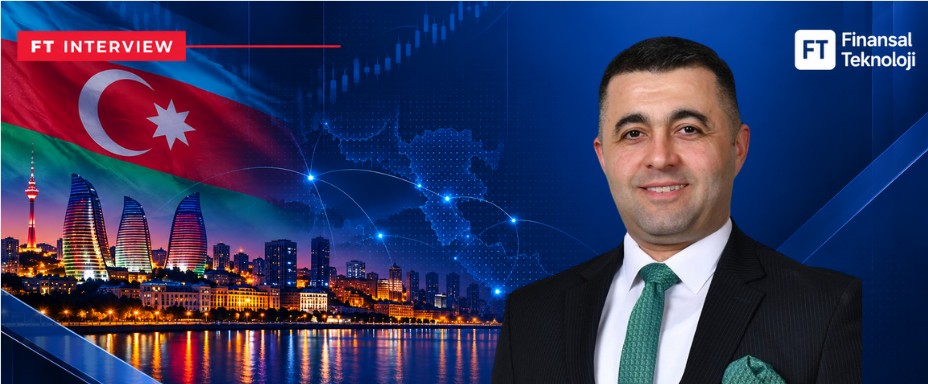
In the Global Fintech Association Interview Series, Azerbaijan Fintech Association (AzFina) Chairman of the Executive Board Edgar Abdullayev discusses the country’s transition toward a more integrated digital financial ecosystem, cooperation between the fintech industry and the Central Bank, and Azerbaijan’s potential role in connecting Türkiye, Central Asia, the Gulf and European markets. He also argues that the next stage of regional cooperation should move beyond institutional relationships toward practical cross-border fintech projects.
Bu içerik şu şirket tarafından desteklenmektedir:
Azerbaijan Fintech Association ( Azfina)
Şirket profilini görüntüle →From the Azerbaijan Fintech Association’s perspective, what is the most important transformation currently taking place in Azerbaijan’s fintech ecosystem, and what is driving it?
The most important transformation taking place in Azerbaijan’s fintech ecosystem is the transition from a fragmented payments market towards a more integrated and coordinated digital financial ecosystem, supported by a common regulatory and technological infrastructure.
AzFina itself reflects this transformation. Founded in December 2020 by six companies, the Association has grown to more than 20 members, bringing together a broad cross-section of the digital financial ecosystem — including banks, electronic money institutions, payment aggregators and technology companies, as well as international partners such as Visa, Mastercard and IFC (International Finance Corporation). This diversity is important because fintech is no longer developing within a single industry; it increasingly connects financial services, technology, telecommunications and digital commerce.
A particularly important development in 2024–2026 has been the shift from the initial stage of market formation towards a more structured regulatory and infrastructure environment. The Central Bank’s Special Regulatory Regime (Sandbox), the development of Instant Payments and AZQR, and the implementation of Open Banking are creating new opportunities for innovation and competition.
A symbolic milestone was reached in May 2026, when AzFina members MPAY and GoldenPay became the first electronic money institutions in Azerbaijan to integrate into the Open Banking ecosystem. This represents an important shift from simply providing digital payment services towards participating in a more connected digital financial ecosystem.
The transformation is being driven by a combination of regulatory policy, technological development, growing customer expectations and constructive dialogue between the financial industry and the Central Bank. Recent discussions between AzFina members and the Central Bank have also focused on practical issues such as the Sandbox, QR payments, Shared KYC and reducing customer-identification costs.
From AzFina perspective, the next stage is not simply about increasing the number of fintech companies. It is about creating an ecosystem in which different participants can interoperate, innovate responsibly and ultimately scale their solutions beyond Azerbaijan.
Where does Azerbaijan’s fintech ecosystem have a genuine competitive advantage today, and in which areas does it still need to move faster?
Azerbaijan’s genuine competitive advantage is not based on a single technology or product. It is the combination of an increasingly modern digital financial infrastructure, an open and supportive regulatory environment, an active fintech community and Azerbaijan’s unique position connecting Türkiye, the Turkic States, Central Asia, the Gulf and Europe.
We see particular potential in the wider Turkic and Central Asian space. Azerbaijan can serve as a natural bridge between these markets, both geographically and through its institutional, economic and cultural connections. This creates opportunities for cooperation in payments, digital commerce, financial technology, digital identity and other emerging areas.
Another important advantage is the openness of the ecosystem. The market is not limited to traditional financial institutions. Through AzFina, banks, electronic money and payment institutions, payment aggregators and technology acompanies, as well as international partners, can engage in a common industry dialogue. This diversity allows us to look at fintech development from a much broader perspective.
At the same time, innovation has to develop responsibly. We believe that the strongest fintech ecosystem is one where companies can test and introduce new business models and technologies within a clear legal and regulatory framework and in constructive dialogue with the Central Bank. The development of regulatory sandbox mechanisms is particularly important in this respect.
Our members are therefore looking beyond classical payment products. There is growing interest in Open Banking, embedded finance, AI-based solutions, fraud prevention, RegTech, digital identity, new approaches to acquiring and payment services, and other technology-driven financial models.
Where we need to move faster is in turning this openness and innovation into greater scale. We need broader adoption of Open Banking, deeper development of non-payment fintech segments, stronger access to investment and international markets, and greater interoperability of payment, KYC and digital identity standards across neighbouring markets.
Our objective should not simply be to have more fintech companies. It should be to create the conditions in which Azerbaijani companies can innovate responsibly at home and then scale their solutions across the region.
How does AzFina identify the most important needs of its members and translate them into a common industry agenda?
AzFina’s approach is essentially bottom-up: we start with the practical needs and challenges faced by our members and then turn them into a common industry agenda.
A key mechanism for this is our Expert Group structure. Members can contribute through specialised groups covering areas such as anti-fraud, compliance, legal and regulatory affairs, innovative digital solutions, information security, marketing and public relations, among others. These groups allow professionals from different companies to discuss concrete market issues, exchange experience and develop practical proposals.
The issues identified by the Expert Groups are then discussed at the Association level through meetings of members, the Board and the General Assembly, depending on their importance and scope. We also maintain regular direct dialogue with the Central Bank and other relevant public institutions.
An important part of our approach is that we do not stop at identifying problems. Where an issue has a broader industry impact, AzFina works to develop a common position and, where appropriate, bring it into dialogue with regulators or other industry associations.
A recent example is the joint work with the Azerbaijan Banks Association on a risk-based approach to payment instruments. Another is our ongoing dialogue with the Central Bank and IFC on issues such as the regulatory sandbox, QR payments, Shared KYC and practical regulatory challenges faced by market participants.
We also see the Association as a platform for cooperation rather than only advocacy. Our objective is to bring different parts of the ecosystem together, find areas of common interest and transform individual market challenges into solutions that can benefit the wider industry.
In this sense, AzFina’s role is to connect three levels: the practical needs of market participants, the common interests of the industry, and constructive dialogue with policymakers and regulators.
AzFina maintains an active dialogue with the Central Bank of the Republic of Azerbaijan. Where has cooperation between the fintech industry and public authorities produced the clearest results in Azerbaijan, and what made those cases work?
One of the clearest results of cooperation between the fintech industry and the Central Bank has been the creation of a regulatory and infrastructure environment in which new financial business models can develop in a more structured and predictable way.
The development of the payment and electronic money framework is a good example. The adoption of the Law on Payment Services and Payment Systems and the introduction of the Central Bank’s Special Regulatory Regime (Sandbox) created a clearer pathway for fintech companies to test and develop innovative services within a defined regulatory framework. A number of AzFina members subsequently became licensed payment and electronic money institutions, contributing to the diversification of Azerbaijan’s financial ecosystem.
A second important area is the development of digital financial infrastructure, particularly Open Banking, Instant Payments and AZQR. These are not simply technological projects; they require continuous coordination between the regulator, banks, fintech companies and technology providers. The progress of Open Banking, including the participation of electronic money institutions, is a good example of this cooperation in practice.
A third result is the institutionalisation of industry dialogue. AzFina and the Central Bank have maintained regular communication through dedicated meetings, expert discussions and joint industry platforms. These interactions allow practical issues faced by market participants to be discussed directly with the regulator. Recent discussions have included the regulatory sandbox, QR payments, Shared KYC and other practical challenges affecting fintech companies.
What makes these cases work is that the dialogue is continuous rather than episodic. The industry brings practical experience and concrete problems to the discussion, while the Central Bank provides the regulatory and infrastructure perspective. Importantly, the objective is not to reduce regulatory requirements, but to make innovation possible within a clear, risk-based and legally compliant framework.
We believe this model of constructive cooperation is one of Azerbaijan’s strongest advantages. It allows regulation and market innovation to develop together rather than in isolation.
Azerbaijan is positioned between Türkiye, Central Asia, the Gulf and Europe. Where do you see the most realistic opportunities for fintech cooperation across these markets, and what could be an effective first step?
Azerbaijan’s position gives us an opportunity to look at fintech cooperation much more broadly than within a single regional bloc. We see Azerbaijan as a bridge connecting Türkiye and the wider Turkic and Central Asian region with the Gulf, Georgia and European markets.
For AzFina, this is also reflected in the way our international network is developing. We are building relationships not only with fintech associations in Türkiye, Kazakhstan, Uzbekistan and Kyrgyzstan, but also with partners and ecosystems in the Gulf, Asia and Europe. Through platforms such as TURKFIN, cooperation with Central Asian fintech communities, and our participation in international platforms in Europe, Asia and the Gulf, we are gradually connecting different fintech ecosystems around Azerbaijan.
This diversity is important. We do not see fintech cooperation as something limited to neighbouring or culturally close markets. We want Azerbaijan’s fintech ecosystem to remain open to different technologies, business models, investment opportunities and international partnerships.
From a business perspective, the most realistic opportunities are in cross-border payments, digital commerce, digital identity and KYC, Open Banking, embedded finance, fraud prevention and fintech investment. There is also significant potential for fintech companies from these markets to use Azerbaijan as a platform for entering neighbouring markets, and vice versa.
The next step, however, should be to move from relationships to practical cooperation. We already have a growing network of institutional contacts and partnerships. The real value will come from turning this network into concrete projects — for example, cross-border payment corridors, digital-commerce corridors, interoperable KYC or identity solutions, joint fintech pilots, and mechanisms that help companies test and scale their solutions across several markets.
Of course, this should be developed within the applicable legal and regulatory frameworks of each jurisdiction and in dialogue with the relevant authorities.
So, if I had to identify one effective first step, it would be to select a small number of practical cross-border use cases and bring the relevant fintech companies, banks, associations and regulators around the same table. Start with one corridor or one use case, prove that it works, and then scale it.
For AzFina, the strategic objective is not simply to have more international MoUs. It is to build a wider business network around Azerbaijan where fintech companies can connect, cooperate, test, invest and ultimately scale across Türkiye, Central Asia, the Gulf, Asia and Europe.
By 2030, what should fintech associations have built together that no single country can build effectively on its own?
By 2030, we believe fintech associations should help build a connected international fintech ecosystem — not a single regulatory system, but common standards, trusted relationships and practical mechanisms that make cross-border cooperation easier.
We would focus on several areas: cross-border payments, digital identity and KYC, data exchange, fraud prevention, and easier pathways for fintech companies to test and scale their solutions in other markets.
Just as importantly, associations should build stronger connections between fintech companies, banks, investors, technology providers and regulators. This can create opportunities for companies not only to cooperate, but also to enter new markets, attract investment and develop joint products.
No single country can build this effectively on its own, because fintech is increasingly cross-border. Payments, digital commerce, technology, data and financial innovation are connecting markets much more closely than before.
For Azerbaijan, this is especially important. We see our country as a potential bridge between Türkiye, Central Asia, the Gulf, Europe and other international markets. AzFina is already working to expand these connections, and we believe our next step should be to turn them into more practical business cooperation and joint fintech projects.
By 2030, we would like to see us move from separate national ecosystems and individual partnerships towards a genuinely connected fintech network — where companies can connect, test, cooperate and scale across markets more easily.
That, in our view, is something that no single country or association can build alone.
Sesli Dinle
Editör Ekibi
FT Finansal Teknoloji editör ekibi, fintech ve dijital finans alanındaki gelişmeleri haber değeri ve editoryal perspektifle takip eder.